
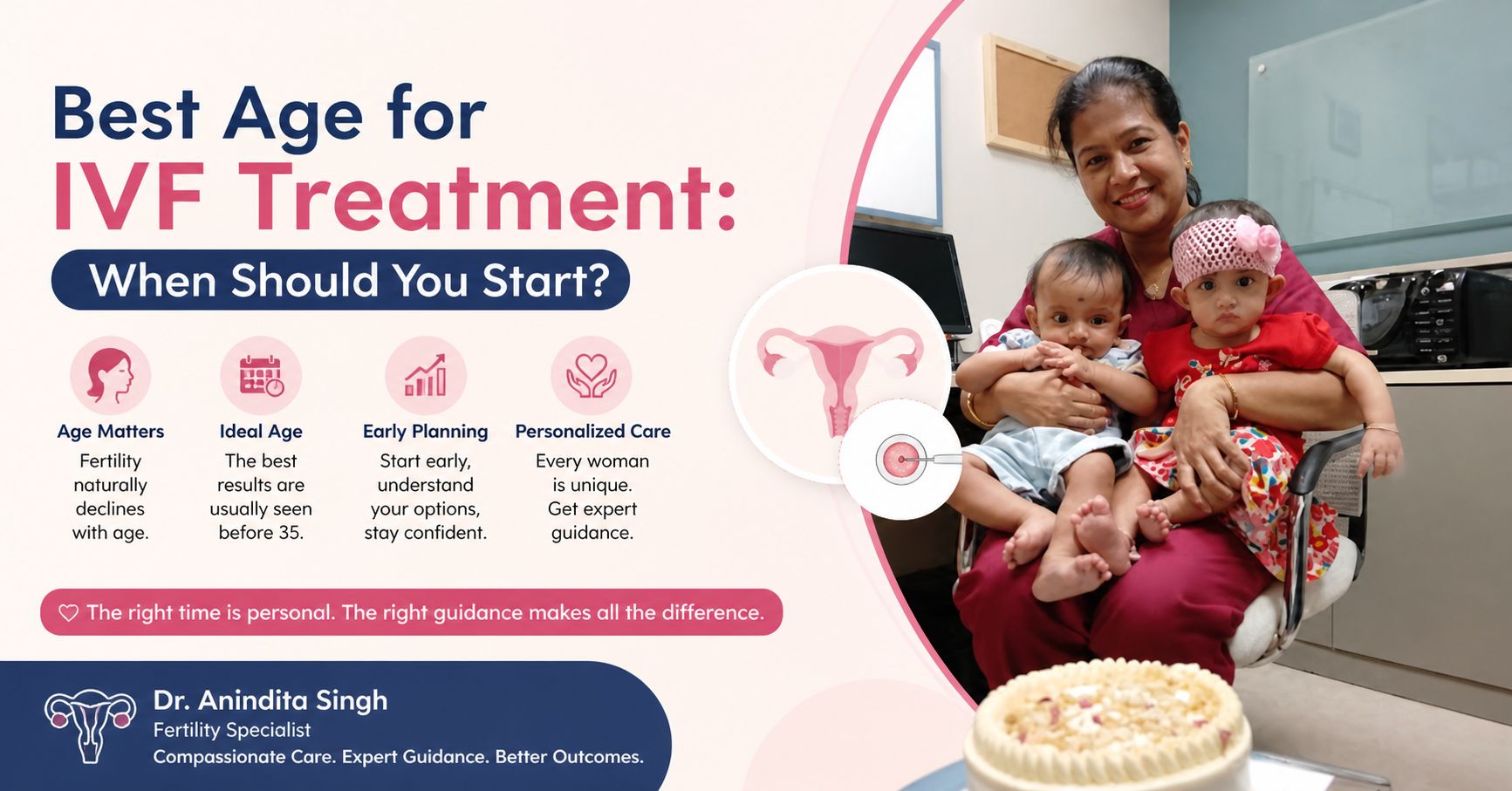
Having a family is a serious matter, and it might not just occur to some couples. IVF (In Vitro Fertilization) can help in this. IVF is a procedure in which the combination of an egg and sperm takes place outside the body and an embryo is inserted into the uterus to get pregnant.
The question that has been raised most often is: What is the optimum age to undergo IVF? The same cannot be said to all, though age is a very significant factor. The age factor can influence your future fertility, and knowing this is important to make a lot of decisions.
The importance of Age in IVF.
Women are born with a certain quantity of eggs. With age, the quantity and quality of these eggs reduces. This implies that it may end up being more difficult to conceive with time.
The younger eggs are healthier and they have a higher chance of growing into a healthy embryo. With age eggs can develop more issues, and this can result into less possibility of pregnancy or higher possibility of miscarriage.
IVF has the potential to address most fertility issues, but it is not able to completely address the impact of age. And that is why time is important.
IVF in Your 20s
Your fertility is the best in your 20s. You are a healthy egg producer, and you have a high probability of becoming pregnant, natural or using IVF.
The majority of women in their 20s do not require IVF unless the fallopian tubes are blocked, endometriosis is severe or there is a male fertility problem. In case IVF is required at this age, then the success rates are normally high.
Unless there is a compelling reason, doctors tend not to recommend rushing into IVF at such a time. The first one is natural conception.
IVF at a young age (30s).
The end of your 30s are not too late to have a baby. The quality of the eggs remains rather high, but it can begin to decrease gradually.
Most of the women within this age bracket are still capable of conceiving naturally although there might be problems, IVF may be an option. The success rates remain to be good and the body tends to respond well to therapy.
When you have spent 1 year with no success in having a baby it might be time to approach a fertility specialist. Complications can be avoided by taking action early.
IVF After 35
An age 35 is often regarded as a significant age in fertility. The quality and quantity of eggs begin to decrease more rapidly after this.
This does not imply that it cannot get pregnant- it only implies that it would require more time and possibly medical assistance. IVF is usually advised in the case of women at this age provided they are experiencing problems.
Doctors typically propose that one should not wait too long beyond 35. In case you have been trying 6 months without success, then you should seek help early.
Although the success rates are less when compared to younger women, a significant number of women between 30 and 40 years old undergo successful IVF pregnancies.
IVF After 40
Fertility becomes difficult after 40. There is a significantly less amount of healthy eggs and the probability of a natural pregnancy decreases.
IVF can still be done, but with less success. In other instances, physicians can recommend the use of donor eggs in order to maximize the probability of success.
One should bear in mind that each individual is unique. Other women might conceive after 40, although it might need additional support and preparation.
It is Not Age-Related.
The factor of age is also important, but not the only one, that influences IVF success. Others are also important like your general health, hormone levels and lifestyle.
For instance, the healthy body is able to react to the treatment. Your chances can be enhanced by eating healthy, exercising, avoiding bad habits such as smoking and use of alcohol.
It also depends on the health of your partner. The quality of eggs is as crucial as sperm quality in the IVF process.
When Do You Think You Should Think about IVF?
You might want to consider IVF when:
- You have been trying to become pregnant
- You are above the age of 35 and have been trying for more than six months
- You have conditions such as PCOS, endometriosis or blocked tubes.
- Your partner has sperm issues
- Other therapies have failed.
The sooner you get assistance, the greater you have a chance of success.
Is It possible to enhance IVF Success?
Although you may not be able to do anything about your age, it is not too late to increase your chances of success by taking care of your body.
A healthy diet, sleeping enough, and stress also help your body to react more in response to IVF. It is also important to be active and to have a healthy weight. Please try to be positive and patient. IVF may be time-consuming, and each process is unique.
Feelings During IVF
IVF is not only physical, but may also be emotional. It can be stressful when waiting for results, being uncertain, and dealing with expectations.
You should discuss with your partner and tell him or her how you feel. Family support or a counselor can help, too. It is important to take care of your mental health in the same way that you take care of your body.
Conclusion
The age at which IVF should be initiated is not perfect. However, the earlier it is initiated, the higher the chances of its success are. The success rates of women are highest in their mid 20s and early 30s, and gradually decline past 35 and beyond.
The last but the most significant is that you should not wait long in case you have problems. Timely assistance can go a long way.
IVF can bring hope to lots of couples with the help of proper medical treatment, proper habits, and a positive attitude towards it. When you are not certain when to begin, it might be a good idea to talk to a fertility specialist and to know what you can do and how to proceed to the next step without any hesitation.