

Introduction
Many people think infertility is only a women’s health issue. However, medical research shows that male infertility is responsible for nearly half of all infertility cases. Problems related to sperm count, sperm quality, sperm movement, or reproductive health can make it difficult for a couple to conceive naturally.
Today, thanks to modern medical science, many couples can achieve their dream of becoming parents. Early diagnosis, proper evaluation, and the right treatment plan play an important role in improving fertility outcomes.
When searching for the best male infertility doctor in Kolkata, many couples look for an experienced fertility specialist who understands both male and female fertility issues. Choosing the right specialist can help identify the exact cause of infertility and recommend the most suitable treatment.
Kolkata has several advanced fertility centres equipped with modern diagnostic facilities and treatment options. From simple lifestyle modifications to advanced reproductive technologies such as IVF and ICSI, couples now have access to comprehensive fertility care.
Male infertility should never be considered a personal failure or a reason for embarrassment. It is simply a medical condition that can often be treated successfully. Seeking medical advice at the right time can make a significant difference.
What Is Male Infertility?
Male infertility is a condition where a man faces difficulty in helping achieve pregnancy naturally. This usually happens because healthy sperm are not produced in sufficient numbers or because the sperm cannot reach the female egg successfully.
Healthy sperm should have three important qualities:
- Good quantity
- Good movement (motility)
- Good shape (morphology)
If one or more of these factors are affected, natural conception may become difficult.
Many men have no visible symptoms until they start trying to have a baby. That is why fertility evaluation becomes important when pregnancy does not occur despite regular unprotected intercourse.
Fortunately, many causes of male infertility are treatable with medicines, surgery, lifestyle improvements, or assisted reproductive technologies.
How Common Is Male Infertility?
Male infertility is much more common than most people think.
Medical experts estimate that male-related factors contribute to approximately 40% to 50% of infertility cases. This means that fertility evaluation should always include both partners rather than focusing only on the female partner.
Unfortunately, social myths often prevent men from seeking medical help. Many delay treatment because they believe infertility is always caused by women.
Early diagnosis increases the chances of successful treatment and reduces unnecessary emotional stress.
Signs and Symptoms of Male Infertility
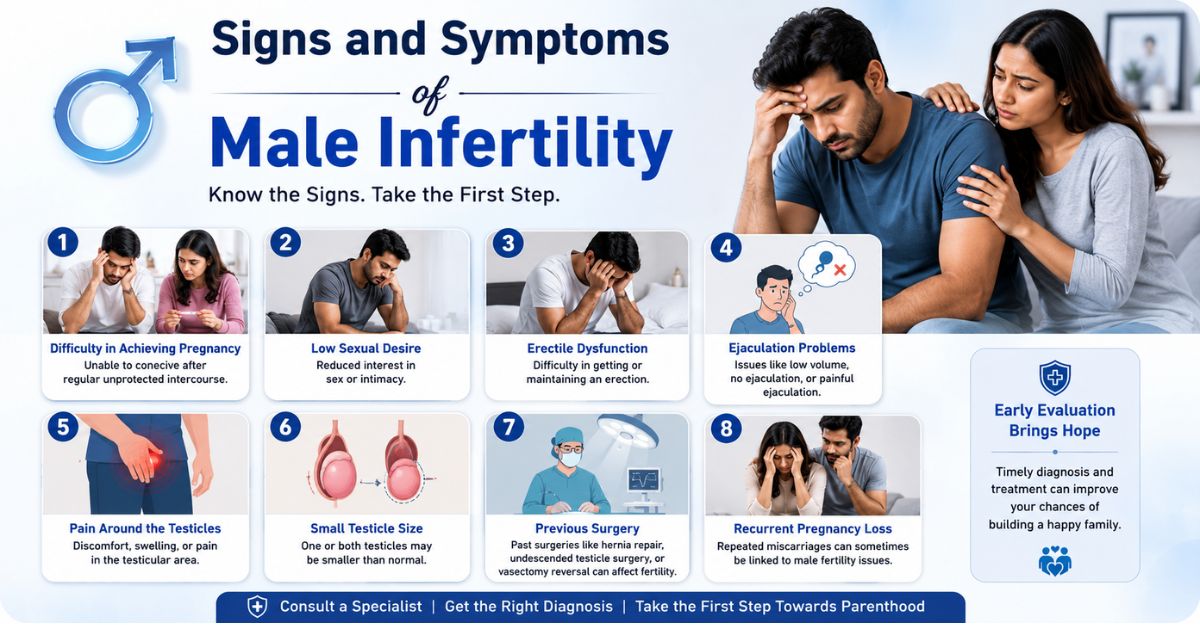
Many men experience no symptoms at all.
However, some warning signs may indicate fertility problems.
Difficulty in Achieving Pregnancy
The most common symptom is the inability to conceive after trying for one year without contraception.
Low Sexual Desire
Hormonal imbalance may reduce libido and affect fertility.
Erectile Dysfunction
Some men experience difficulty achieving or maintaining an erection.
Ejaculation Problems
Delayed ejaculation, painful ejaculation, or no ejaculation may require medical evaluation.
Pain Around the Testicles
Pain, swelling, or a lump near the testicles should never be ignored.
Small Testicle Size
Smaller-than-normal testicles may indicate hormone-related problems.
Previous Surgery
Men who have undergone hernia surgery, undescended testicle surgery, or reproductive surgery should discuss fertility with their doctor.
Recurrent Pregnancy Loss
Sometimes sperm quality may contribute to repeated miscarriages.
Common Causes of Male Infertility
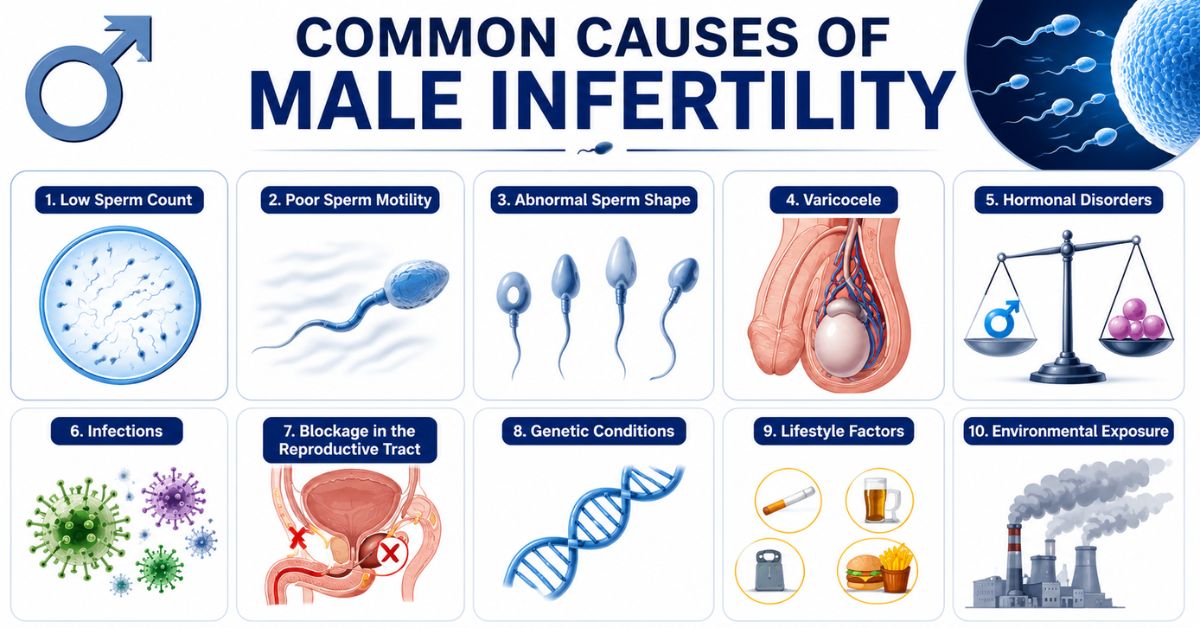
Understanding the cause is the first step toward successful treatment.
Low Sperm Count
Low sperm count is one of the most common reasons behind infertility.
When sperm numbers are lower than normal, fewer sperm reach the egg, reducing the chances of fertilization.
Low sperm count may occur because of:
- Hormonal imbalance
- Smoking
- Alcohol
- Obesity
- Certain medicines
- Infections
- Environmental toxins
Poor Sperm Motility
Sperm must swim properly to reach the egg.
If sperm movement is weak, pregnancy becomes difficult even if sperm count is normal.
Poor motility may result from:
- Varicocele
- Smoking
- Heat exposure
- Infections
- Genetic conditions
Abnormal Sperm Shape
Healthy sperm have a specific shape that helps fertilization.
Abnormally shaped sperm may have difficulty reaching or fertilizing the egg.
Varicocele
Varicocele refers to enlarged veins around the testicle.
It is one of the most common treatable causes of male infertility.
Varicocele increases the temperature around the testicles, which may reduce sperm production and quality.
In selected patients, surgery can improve fertility.
Hormonal Disorders
Hormones control sperm production.
Problems involving testosterone or pituitary hormones may reduce fertility.
Hormonal treatment may help some patients depending on the underlying condition.
Infections
Certain infections can affect sperm production or block sperm transport.
Examples include:
- Sexually transmitted infections
- Mumps after puberty
- Prostate infections
- Epididymitis
Early treatment can prevent long-term complications.
Blockage in the Reproductive Tract
Sometimes sperm production remains normal, but sperm cannot travel because of a blockage.
These blockages may occur because of:
- Previous surgery
- Injury
- Infection
- Congenital abnormalities
In some cases, surgical correction is possible.
Genetic Conditions
Certain inherited conditions can reduce fertility.
Genetic testing may be recommended for men with severe infertility.
Understanding the genetic cause also helps doctors select the best treatment approach.
Lifestyle Factors
Lifestyle has a significant impact on male fertility.
Poor habits that may reduce fertility include:
- Smoking
- Heavy alcohol consumption
- Drug abuse
- Poor diet
- Obesity
- Lack of exercise
- Chronic stress
- Inadequate sleep
Improving lifestyle often enhances overall reproductive health.
Environmental Exposure
Long-term exposure to chemicals, pesticides, heavy metals, and radiation may reduce sperm quality.
Men working in factories, chemical industries, or high-temperature environments should discuss occupational exposure with their doctor.
Who Is at Higher Risk of Male Infertility?
Certain factors increase the risk of infertility.
These include:
- Age above 40 years
- Smoking
- Alcohol misuse
- Diabetes
- Obesity
- High blood pressure
- Previous chemotherapy
- Radiation therapy
- Family history of infertility
- Testicular injury
- Hormonal disorders
Not every man with these risk factors becomes infertile, but they deserve proper medical evaluation.
When Should You Visit a Fertility Specialist?
Doctors usually recommend fertility evaluation if:
- Pregnancy has not occurred after one year of regular unprotected intercourse.
- The female partner is over 35 years old and pregnancy has not occurred after six months.
- There is a history of repeated miscarriage.
- The male partner has erectile or ejaculation problems.
- Previous semen analysis showed abnormal results.
- There is a history of undescended testicles or reproductive surgery.
- Cancer treatment has affected fertility.
- There are known hormonal disorders.
Early consultation often improves treatment outcomes and reduces unnecessary anxiety.
Why Early Diagnosis Is Important
Many fertility problems become easier to treat when detected early.
An early fertility assessment can:
- Identify the exact cause of infertility
- Prevent unnecessary delays
- Improve treatment success rates
- Reduce emotional stress
- Help couples choose the most appropriate fertility treatment
- Increase the chances of natural conception whenever possible
Modern fertility care focuses on personalized treatment rather than a one-size-fits-all approach.
Diagnosis of Male Infertility
Male infertility cannot be diagnosed based only on symptoms. A proper medical evaluation is necessary to identify the exact cause. The diagnosis usually begins with a detailed discussion about the patient’s medical history, lifestyle, previous illnesses, surgeries, and family history.
The doctor may also ask questions about smoking, alcohol consumption, medications, occupational exposure to chemicals, and sexual health. These details help identify possible factors affecting fertility.
After reviewing the medical history, a physical examination is performed to check the reproductive organs and detect conditions such as varicocele, undescended testicles, or other abnormalities.
A complete fertility evaluation helps doctors prepare the most suitable treatment plan instead of relying on guesswork.
Medical History Assessment
During the first consultation, the fertility specialist collects important information, including:
- Duration of infertility
- Previous pregnancies
- Frequency of intercourse
- Childhood illnesses
- Mumps infection
- Diabetes
- High blood pressure
- Previous surgeries
- Testicular injuries
- Sexual problems
- Current medications
- Lifestyle habits
These details provide valuable clues about the possible reason for infertility.
Physical Examination
A physical examination helps identify visible reproductive problems.
The doctor may examine:
- Testicles
- Penis
- Scrotum
- Epididymis
- Vas deferens
- Signs of hormonal imbalance
- Body hair distribution
- Breast enlargement
Physical examination is simple, painless, and provides useful diagnostic information.
Semen Analysis
Semen analysis is the most important test for evaluating male fertility.
The sample is examined in a laboratory to check:
Sperm Count
The number of sperm present in one millilitre of semen.
Sperm Motility
The ability of sperm to swim properly.
Sperm Morphology
The shape and structure of sperm.
Semen Volume
The amount of semen released during ejaculation.
Sperm Vitality
The percentage of living sperm.
Sometimes doctors recommend repeating the test because sperm quality can naturally vary over time.
Hormone Tests
Hormones play a vital role in sperm production.
Blood tests may include:
- Testosterone
- FSH
- LH
- Prolactin
- Thyroid hormones
Abnormal hormone levels may explain poor sperm production.
Ultrasound Examination
Ultrasound helps detect:
- Varicocele
- Testicular abnormalities
- Blockages
- Cysts
- Structural problems
This painless imaging test provides valuable information about reproductive health.
Genetic Testing
Some men may require genetic evaluation, especially if sperm count is extremely low or absent.
Genetic testing helps identify inherited conditions and assists in treatment planning.
Additional Tests
Depending on the patient’s condition, doctors may recommend:
- Urine analysis
- Infection screening
- DNA fragmentation test
- Anti-sperm antibody test
- Testicular biopsy
- MRI or advanced imaging (if required)
Not every patient needs all these tests.
Male Infertility Treatment Options
Treatment depends entirely on the cause of infertility. The best male infertility doctor in Kolkata will recommend a personalized treatment plan.
Some men need only lifestyle improvements, while others may require advanced fertility treatments.
Lifestyle Modification
Healthy habits can improve sperm quality naturally.
Doctors commonly recommend:
- Stop smoking
- Limit alcohol intake
- Maintain healthy body weight
- Exercise regularly
- Reduce stress
- Sleep at least seven to eight hours
- Drink enough water
- Eat a balanced diet
- Avoid excessive heat around the testicles
Although lifestyle changes may take a few months to show results, they often improve overall reproductive health.
Medicines
Doctors may prescribe medicines when infertility is caused by:
- Hormonal imbalance
- Infections
- Inflammation
- Vitamin deficiencies
Self-medication should always be avoided.
Hormone Therapy
Hormonal treatment may be helpful when infertility is caused by hormone deficiencies.
Regular follow-up and blood tests are important during treatment.
Surgical Treatment
Certain conditions can be corrected through surgery.
Examples include:
Varicocele Surgery
Repairing enlarged veins around the testicles may improve sperm quality.
Removal of Blockages
Some men have blocked reproductive ducts that prevent sperm from reaching the semen.
Surgery may restore sperm flow.
Sperm Retrieval Procedures
If sperm are absent in semen, doctors may retrieve sperm directly from the testicles for IVF or ICSI treatment.
Assisted Reproductive Technologies
Modern fertility medicine offers several advanced treatment options.
Intrauterine Insemination (IUI)
IUI is often recommended for mild male infertility.
The process involves:
- Collecting healthy sperm
- Washing and preparing the sperm
- Placing the sperm directly inside the uterus during ovulation
IUI increases the chances of fertilization.
In Vitro Fertilization (IVF)
IVF is recommended when natural conception becomes difficult.
During IVF:
- Eggs are collected from the female partner.
- Healthy sperm are prepared.
- Fertilization takes place in the laboratory.
- Healthy embryos are transferred into the uterus.
IVF has helped millions of couples achieve pregnancy.
Intracytoplasmic Sperm Injection (ICSI)
ICSI is one of the most successful treatments for severe male infertility.
Instead of allowing sperm to fertilize the egg naturally, a single healthy sperm is injected directly into one mature egg.
ICSI is especially useful for:
- Very low sperm count
- Poor sperm motility
- Abnormal sperm shape
- Previous IVF failure
Can Male Infertility Be Prevented?
Not every case can be prevented, but healthy habits reduce the risk.
Doctors recommend:
- Maintain normal body weight.
- Eat fresh fruits and vegetables.
- Exercise regularly.
- Stop smoking.
- Avoid recreational drugs.
- Reduce alcohol intake.
- Sleep well.
- Manage stress.
- Avoid overheating the testicles.
- Wear protective equipment while working with chemicals.
Success Rate of Male Infertility Treatment
The success rate of male infertility treatment depends on the underlying cause, the age and health of both partners, sperm quality, and the type of treatment used. Many cases of male infertility can be successfully managed with the right diagnosis and personalized treatment plan.
Male Infertility Success Rate
The success of treatment varies from person to person. Men with lifestyle-related infertility or hormonal problems often see significant improvement after lifestyle changes, medications, or hormone therapy. Conditions such as varicocele may also improve after surgery in selected patients. Early diagnosis and timely treatment usually offer better outcomes.
IVF Success Rate
In Vitro Fertilization (IVF) is one of the most effective fertility treatments for couples facing infertility. The success rate of IVF depends on several factors, including the female partner’s age, egg quality, sperm quality, and embryo development. In general, younger women tend to have higher IVF success rates than older women. Following the doctor’s advice and maintaining a healthy lifestyle can also improve the chances of success.
ICSI Success Rate
Intracytoplasmic Sperm Injection (ICSI) is an advanced fertility treatment commonly recommended for severe male infertility. During ICSI, a single healthy sperm is injected directly into a mature egg to achieve fertilization. This technique has helped many couples with low sperm count, poor sperm motility, or abnormal sperm morphology achieve pregnancy. The success of ICSI depends on the overall fertility health of both partners and the quality of the embryos.
Best Foods to Improve Male Fertility
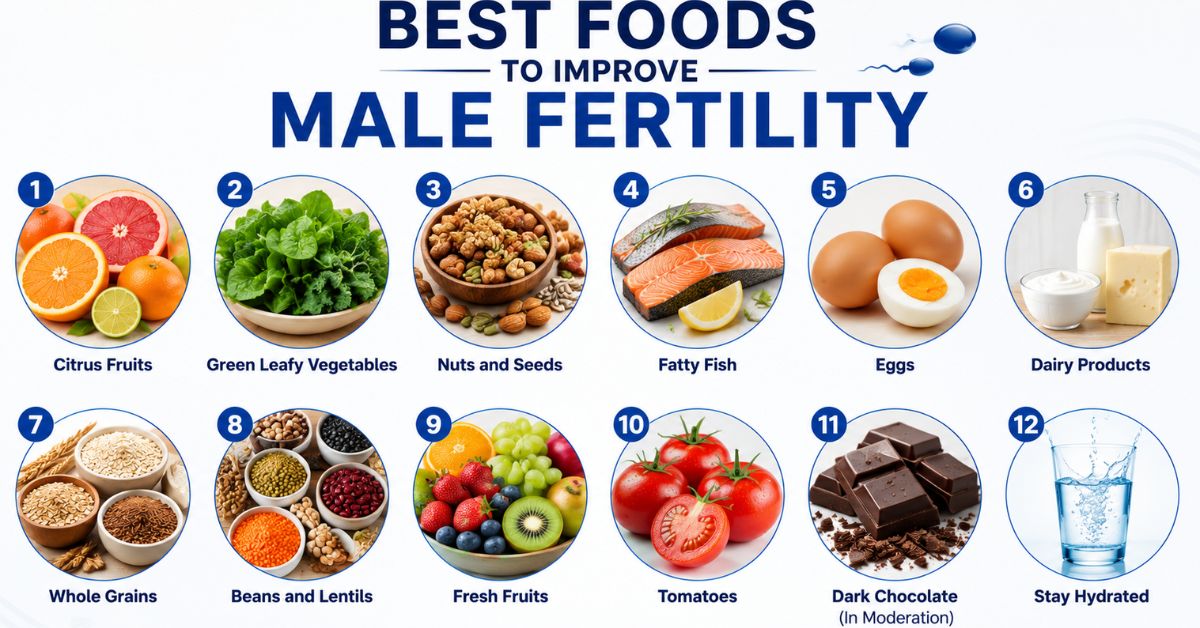
Citrus Fruits
Citrus fruits such as oranges, lemons, sweet limes, and grapefruits are rich in Vitamin C, one of the most powerful antioxidants. Vitamin C helps protect sperm from damage caused by free radicals and supports healthy sperm production.
Some good choices include:
- Oranges
- Sweet lime (Mosambi)
- Lemon
- Grapefruit
Including one or two servings of citrus fruits every day may help improve sperm quality and strengthen the immune system.
Green Leafy Vegetables
Green vegetables are packed with folate, iron, vitamins, and antioxidants that are essential for reproductive health. Folate plays an important role in healthy sperm production and DNA formation.
Recommended vegetables include:
- Spinach
- Broccoli
- Kale
- Fenugreek leaves
- Lettuce
Eating fresh vegetables daily also supports overall health and hormone balance.
Nuts and Seeds
Nuts and seeds are excellent sources of healthy fats, zinc, selenium, and Vitamin E. These nutrients help improve sperm quality and protect sperm cells from oxidative stress.
Some fertility-friendly options are:
- Walnuts
- Almonds
- Pumpkin seeds
- Sunflower seeds
- Flaxseeds
- Chia seeds
A small handful of mixed nuts each day can be a healthy addition to your diet.
Fatty Fish
Fish rich in Omega-3 fatty acids may support healthy sperm development and improve sperm motility. Omega-3 fats also reduce inflammation and support heart health.
Good options include:
- Salmon
- Sardines
- Mackerel
- Tuna (in moderation)
Eating fish two or three times a week can be beneficial for overall reproductive health.
Eggs
Eggs are an excellent source of high-quality protein, Vitamin D, Vitamin B12, and choline. They provide essential nutrients that support healthy sperm production.
Including eggs as part of a balanced diet can help meet daily protein requirements.
Dairy Products
Low-fat dairy products provide calcium, protein, and Vitamin D, which are important for maintaining overall health.
Healthy options include:
- Milk
- Yogurt
- Cottage cheese (Paneer)
Choose low-fat varieties whenever possible as part of a balanced diet.
Whole Grains
Whole grains provide complex carbohydrates, fibre, and essential nutrients that help maintain energy levels and support hormone balance.
Examples include:
- Brown rice
- Oats
- Whole wheat
- Quinoa
- Barley
Replacing refined grains with whole grains is a healthy choice for overall wellness.
Beans and Lentils
Beans and lentils are rich in plant-based protein, iron, folate, and fibre. They are nutritious additions to a fertility-friendly diet.
Some good options include:
- Chickpeas
- Kidney beans
- Black beans
- Lentils
- Green peas
These foods also help maintain healthy blood sugar levels.
Fresh Fruits
A variety of colourful fruits provide antioxidants that protect sperm from oxidative damage.
Healthy choices include:
- Blueberries
- Strawberries
- Apples
- Bananas
- Pomegranates
- Grapes
Eating seasonal fruits every day supports overall health and fertility.
Tomatoes
Tomatoes contain lycopene, a natural antioxidant that has been linked to better sperm health in some studies. Cooked tomatoes may provide even more absorbable lycopene than raw tomatoes.
Tomatoes can be included in soups, salads, curries, or sauces.
Dark Chocolate (In Moderation)
Dark chocolate contains antioxidants and minerals such as magnesium. Choosing dark chocolate with a high cocoa content and eating it in moderation can be part of a balanced diet.
Stay Hydrated
Water is essential for every function in the body, including reproductive health. Drinking enough water every day supports overall well-being and helps maintain healthy semen production.
Aim to drink adequate water throughout the day, especially during hot weather or after exercise.
Foods to Limit or Avoid
Just as some foods may support fertility, others may have a negative effect when consumed excessively. A healthy diet complements the treatment plan recommended by the best male infertility doctor in Kolkata.
Try to limit:
- Processed foods
- Sugary drinks
- Fast food
- Deep-fried foods
- Excessive alcohol
- Smoking and tobacco products
- Excess caffeine
- Trans-fat-rich snacks
Replacing unhealthy foods with fresh, home-cooked meals is a simple way to improve overall health.
How to Choose the Best Male Infertility Doctor in Kolkata
Selecting the right fertility specialist is one of the most important decisions for couples planning treatment.
Consider the following factors:
Experience
Choose a doctor who has experience in diagnosing and managing infertility.
Modern Diagnostic Facilities
A good fertility centre should offer advanced diagnostic tests under one roof.
Personalized Treatment
Every patient is different. Treatment should be tailored according to individual needs.
Transparent Communication
The doctor should explain test results, treatment options, benefits, risks, and expected outcomes in simple language.
Advanced Fertility Techniques
The fertility centre should provide access to treatments such as:
- IUI
- IVF
- ICSI
- Sperm retrieval procedures
- Fertility preservation
Patient Support
Infertility treatment can be emotionally challenging. A supportive healthcare team helps couples stay informed and confident throughout the process.
Why Early Treatment Matters
Many couples postpone fertility evaluation because they hope pregnancy will happen naturally.
However, delaying treatment may reduce the chances of success, especially when age or underlying medical conditions are involved.
Early diagnosis allows doctors to:
- Identify the problem sooner
- Start appropriate treatment
- Improve pregnancy outcomes
- Reduce emotional stress
- Save valuable time
The earlier a couple seeks professional guidance, the better the opportunity for successful fertility treatment.
Male Infertility Myths vs Facts
Many people still believe incorrect information about male infertility. These myths often delay diagnosis and treatment. Understanding the facts can help couples make informed decisions.
| Myth | Fact |
|---|---|
| Infertility is always a woman’s problem. | Male factors contribute to nearly 50% of infertility cases. |
| Healthy-looking men cannot be infertile. | Many men with infertility have no visible symptoms. |
| Low sperm count means pregnancy is impossible. | Many men with low sperm count become fathers with proper treatment. |
| IVF is the only solution. | Many cases improve with medicines, lifestyle changes, or minor procedures. |
| Age affects only women. | Male fertility also declines with increasing age. |
| Tight underwear alone causes infertility. | It may contribute in some situations, but it is rarely the only cause. |
| Herbal medicines always improve fertility. | Herbal supplements should only be taken after consulting a qualified doctor. |
| Smoking has no effect on fertility. | Smoking reduces sperm quality, sperm count, and sperm movement. |
Emotional Impact of Male Infertility
Infertility affects more than physical health. It can also have a significant emotional impact on both partners.
Many men experience:
- Stress
- Anxiety
- Depression
- Low self-confidence
- Relationship problems
- Social pressure
These feelings are common and should not be ignored.
Couples should remember that infertility is a medical condition—not a personal failure.
Open communication, emotional support, and professional counselling can make the treatment journey much easier.
Tips for Couples During Fertility Treatment
The fertility journey may take time. Following a few simple tips can help couples stay positive.
Support Each Other
Infertility affects both partners. Encourage each other throughout the treatment process.
Follow the Doctor’s Advice
Take medicines as prescribed and attend all follow-up appointments.
Stay Positive
Every couple’s fertility journey is different. Avoid comparing your progress with others.
Eat Healthy Food
Choose a balanced diet rich in fruits, vegetables, whole grains, lean protein, and healthy fats.
Exercise Regularly
Moderate physical activity supports overall health and helps maintain a healthy weight.
Reduce Stress
Practice yoga, meditation, deep breathing, or spend time on hobbies you enjoy.
Get Enough Sleep
Sleeping 7–8 hours each night helps maintain hormonal balance.
Avoid Smoking and Excess Alcohol
These habits can negatively affect fertility and overall health.
Why Many Couples Choose Kolkata for Fertility Treatment
Kolkata has become one of the preferred destinations for fertility care because of its experienced specialists, modern fertility centres, and advanced reproductive technologies.
Many fertility clinics in the city provide:
- Comprehensive fertility evaluation
- Advanced diagnostic facilities
- Personalized treatment plans
- IVF and ICSI services
- Experienced embryology laboratories
- Counselling and patient support
Patients from different parts of India often visit Kolkata because they can access high-quality fertility care in one place.
How to Improve Male Fertility Naturally
Although not every fertility problem can be prevented, healthy habits can improve reproductive health.
Simple lifestyle changes include:
- Eat a balanced diet.
- Maintain a healthy weight.
- Exercise regularly.
- Stop smoking.
- Limit alcohol consumption.
- Stay hydrated.
- Sleep well every night.
- Reduce stress.
- Avoid excessive heat exposure.
- Manage chronic medical conditions such as diabetes and high blood pressure.
These habits also improve overall health and well-being.
Why Early Consultation Is Important
Many couples delay fertility treatment because they believe pregnancy will happen naturally with time.
However, delaying medical evaluation may reduce treatment success, especially if age or underlying health conditions are involved.
Early consultation offers several benefits:
- Faster diagnosis
- Timely treatment
- Better pregnancy outcomes
- Reduced emotional stress
- Personalized fertility planning
Seeking professional guidance at the right time can significantly improve the chances of success.
Frequently Asked Questions
1. What is male infertility?
Male infertility is the inability to achieve pregnancy due to problems with sperm production, sperm quality, or the male reproductive system.
2. How common is male infertility?
Male-related factors contribute to nearly half of all infertility cases.
3. What are the most common causes of male infertility?
Low sperm count, poor sperm movement, abnormal sperm shape, hormonal imbalance, infections, varicocele, and lifestyle factors.
4. Can male infertility be treated?
Yes. Many cases respond well to medicines, surgery, lifestyle changes, or assisted reproductive techniques.
5. When should a couple visit a fertility specialist?
If pregnancy has not occurred after one year of regular unprotected intercourse, or after six months if the female partner is older than 35 years.
6. What is a semen analysis?
It is a laboratory test that evaluates sperm count, motility, morphology, and semen quality.
7. Can stress affect male fertility?
Yes. Long-term stress may negatively affect hormone levels and sperm quality.
8. Does smoking reduce fertility?
Yes. Smoking can lower sperm count and damage sperm quality.
9. Can alcohol affect sperm health?
Heavy alcohol consumption may reduce fertility and hormone balance.
10. Does age affect male fertility?
Yes. Male fertility gradually declines with age.
11. What foods help improve sperm quality?
Fresh fruits, vegetables, nuts, fish, eggs, whole grains, and foods rich in antioxidants.
12. Can obesity affect fertility?
Yes. Obesity can reduce hormone balance and sperm production.
13. What is varicocele?
Varicocele is the enlargement of veins around the testicles that may reduce sperm quality.
14. Is surgery always required?
No. Treatment depends on the underlying cause.
15. What is IVF?
IVF is a fertility treatment where fertilization takes place in a laboratory before transferring the embryo into the uterus.
16. What is ICSI?
ICSI is an advanced IVF technique where one healthy sperm is injected directly into an egg.
17. Can lifestyle changes improve fertility?
Yes. Healthy habits often improve sperm health and overall reproductive function.
18. Is infertility only a woman’s problem?
No. Male infertility contributes to approximately half of infertility cases.
19. Can diabetes affect fertility?
Poorly controlled diabetes may reduce male fertility.
20. Is fertility treatment painful?
Most diagnostic tests are simple. Some treatments involve minor procedures, but doctors explain each step carefully.
21. Can male infertility be prevented?
Not always, but maintaining a healthy lifestyle can reduce certain risk factors.
22. How long does fertility treatment take?
The duration varies depending on the cause and the treatment plan.
23. Should both partners undergo fertility evaluation?
Yes. Fertility assessment should include both the male and female partners.
24. Can exercise improve fertility?
Regular moderate exercise supports overall reproductive health.
25. How do I choose the right fertility specialist?
Choose an experienced doctor who offers comprehensive evaluation, personalized treatment, advanced fertility services, and clear communication.
Final Thoughts
Male infertility is more common than many people realize, but it is also one of the most manageable reproductive health conditions when diagnosed early. Modern fertility treatments have helped countless couples achieve their dream of parenthood.
The key to successful treatment is timely evaluation, an accurate diagnosis, and a personalized treatment plan. Couples should never hesitate to seek medical advice if they have been trying to conceive without success.
A healthy lifestyle, regular medical follow-up, and emotional support throughout the treatment journey can make a significant difference. With the right guidance and modern fertility care, many couples can move one step closer to building the family they have always wanted.