
What Is IVF Treatment? Explained in Steps: Process Explained to Beginners
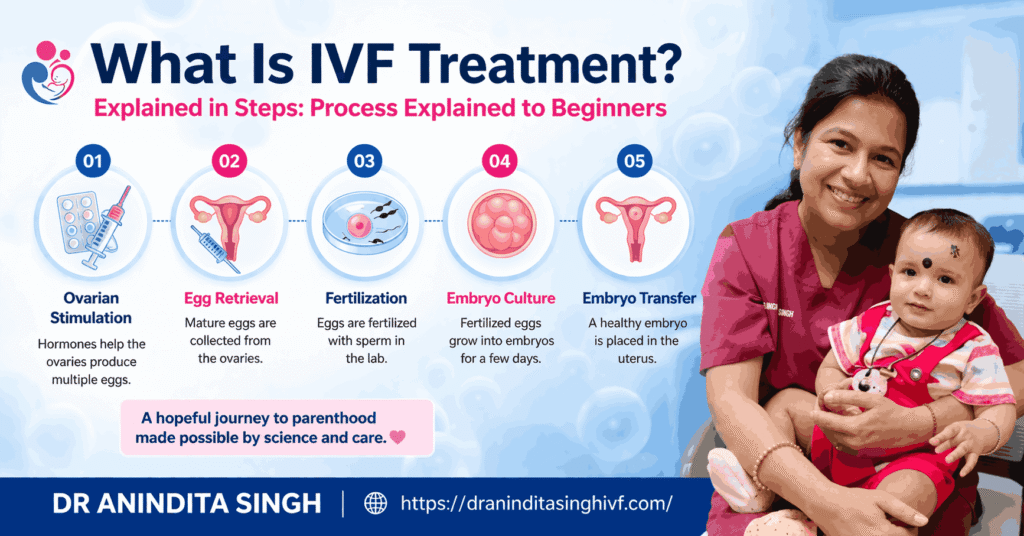
One of the most common and successful assisted reproductive methods that has enabled couples to conceive when they find it hard to conceive naturally is the In Vitro Fertilisation (IVF). IVF can be quite complicated for a beginner, but the process can be broken down into easy steps. What Is IVF? IVF or In Vitro Fertilisation is a procedure which entails fertilisation of an egg and sperm within a laboratory. Fertilisation is initiated when the embryo is implanted in the uterus. This leads to pregnancy. IVF is generally recommended in the event of a case of obstructed fallopian tubes or low sperm count, ovulation disorders or an infertile person with no obvious cause. A Step Towards Successful Pregnancy Phase 1: Introductory visit and evaluation The IVF process is initiated with an elaborate consultation. Medical history is reviewed by the doctor, after which the following tests are recommended: Blood tests to monitor levels of hormones. Ultrasound to check the health of the ovaries. Male fertility examination (sperm). This will help determine the most appropriate treatment plan for an individual. Consult with Dr Anindita Singh, the best IVF doctor in Kolkata, for the best course of action. Step 2: Ovarian Stimulation The ovulatory cycle is the normal menstrual cycle in a woman. In IVF, fertility drugs are applied to get the ovaries to manufacture numerous eggs. This enhances the fertilisation possibilities. Frequent check-ups (blood tests and ultrasound) make sure that the ovaries respond well to the medications. This phase is on average 8-14 days. Step 3: Egg Retrieval After the eggs have matured, a small surgical operation is done to harvest them. This is known as ovum pick-up or egg retrieval. Under Dr Anindita Singh, the best IVF doctor in Kolkata: Mild sedation is used for doing it. Removal of eggs is done by a thin needle in the ovaries. This procedure normally takes about 20-30 minutes. The majority of women can go home the same day. Step 4: Sperm Collection A sample of sperm is taken on the same day as the retrieval of eggs of the female partner. The fertilisation is performed with the help of the healthiest and most active sperm. Sometimes, the use of previously frozen sperm or donor sperm can be utilised. Step 5: Fertilisation The eggs and sperm gathered are mixed in the laboratory. It can be done in two typical ways: Traditional IVF: The eggs and sperm are put together to allow nature to take care of fertilising them. ICSI (Intracytoplasmic Sperm Injection): A single healthy sperm is injected into an egg. Observation of the fertilisation process continues within the following days, with the embryos starting to develop. Step 6: Embryo Culture Once fertilised, it takes the embryos 3-5 days to be seen in the lab. During this time: Sound embryos are sensed. The quality and growth of them are evaluated. The best-quality embryo is transferred in order to maximise the success. Step 7: Embryo Transfer It is a painless and simple process whereby the embryo selected is inserted in the uterus using a thin catheter. This is normally not anaesthetised. The process requires a few minutes. The patient might be encouraged to have a brief rest following the transfer, but normal activities can most probably be resumed soon. Step 8: Waiting Period. Embryos which are transferred are then allowed to wait about 10-14 days, after which a pregnancy test is conducted. This stage might be a very stressful one, as patients are waiting to know whether the treatment has been successful. Step 9: Pregnancy and Follow-Up To determine a pregnancy, a blood test is carried out. With success, additional monitoring can be done to ascertain that the pregnancy continues normally. Otherwise, the doctor can tell about the following steps or further treatment. Please remember that a 100% success rate cannot be expected at this stage. However, Dr Anindita Singh, the best IVF doctor in Kolkata, has a high success rate and will do what is best for you. The Success of IVF The IVF success relies on a number of factors, such as: Age of the woman Quality of eggs and sperm. Underlying medical conditions Lifestyle factors Success rates among the younger women tend to be higher. Nevertheless, the use of IVF has helped many couples to conceive irrespective of their age. Is IVF Safe? IVF is considered to be a safe and familiar procedure. Even though drugs have some mild side effects (bloating or mood swings), there are hardly any severe complications when taken under the supervision of a professional. Schedule Your Appointment Today: Phone: 9830203055 Online Booking: click here Conclusion IVF is a progressive procedure that aims to assist couples in overcoming fertility issues and achieve their dream of having a child. Although it might appear complicated initially, it can be a lot easier and less stressful when one is aware of every stage of the way. In the right hands, featuring the latest technology and emotional attention, IVF offers hope to hundreds of people and couples. Considering this treatment, it is better to have a qualified fertility specialist to take the first step with confidence towards creating your family. Consult Dr Anindita Singh, the best IVF doctor in Kolkata, for the best results.