
Your daily habits influence your capacity to conceive as well as the functioning of hormones within the body, family history, and overall health. However, recently, there has been an increasing number of individuals resorting to vitamins and minerals to help sustain their reproductive systems, both men and women. These products are not replacements for doctor-led care, and with a wise choice, they can really make a difference when implementation is considered as part of everyday life.
Supplements and Fertility
Key vitamins are important to the balance of hormones, and minerals help to ensure the running of a good reproduction. When nutrients are constantly supplied either by food or otherwise, egg and sperm quality tend to increase. A lack of dietary elements that are barely noticed in everyday life is one of the possible causes when ovulation fails. Sperm vitality even drops off occasionally without an obvious cause, but nutrition may be working behind the scenes. Even strategically planned meals sometimes fail to meet their targets, and leave a gap that can be filled by supplements. There is a slight change in the chances of conceiving when nutritional imbalances are corrected, either through plate or pill.
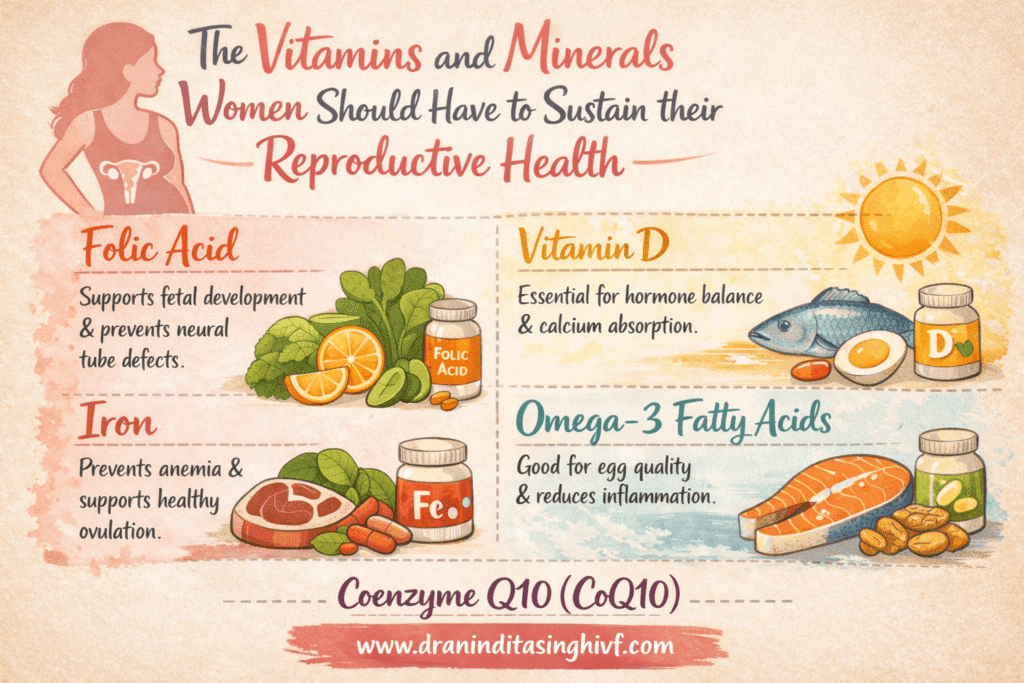
The Vitamins and Minerals Women should have to sustain their Reproductive Health
- Folic Acid
Immediately, folic acid is an exceptional choice in pregnancy preparation. This nutrient is silent and important since the cells require new DNA to multiply. Prior to the time most people are aware they are pregnant, it directs the development of the spine and brain of the baby. The lack of it can lead to a nearly silent beginning of problems in those initial weeks. Then it becomes less a matter of choice and more a matter of groundwork to get adequate amounts.
- Vitamin D
The gift of sunlight is able to keep hormones constant and ovarian functioning on some days. In its absence, the body may experience irregularities of periods that come and go and complicate pregnancy. A sufficient amount can silently increase the chances of an egg releasing properly, along with attaching where necessary.
- Iron
In some cases, women experience difficulties with pregnancy due to iron deficiency. Periods are restless – late coming or missing months – without sufficient of this mineral in the body. Occasionally, egg health submerges under these circumstances. A fix of the shortfall tends to put cycles back on course. A stable supply of supplements is likely to put things back in order.
- Omega-3 Fatty Acids
Healthy fats help in hormone production, as well as enhance blood flow to the reproductive systems and may even enhance egg health. Body-wide inflammation is more likely to decrease with these fats included in the daily meal.
CoQ10 is a powerful defender within cells, which assists in daily processes. Better egg health results from its use in those over the age of thirty.
Supplements To Enhance Male Fertility
- Zinc
Newer zinc supplies aid sperm formation and hormone balance. Once it goes low, the sperm motion and count tend to decrease.
- Selenium
Built into sperm’s makeup, selenium plays a role in form and performance. Protection also takes effect, as it protects reproductive cells against oxidative damage.
- Vitamin E and Vitamin C
Such vitamins combat damage by unstable molecules, which safeguard genetic material in sperm. They enhance the performance of swimmers and the general welfare of the cells one after another.
- L-Carnitine
This amino acid derivative increases energy levels and is also related to improved sperm cell movement and performance. It operates in the backroom of cell processes but presents definite impacts on male reproductive health.
The Role of Antioxidants
Severe oxidative stress has the capacity to damage both genders’ reproductive health. Antioxidants calm free radicals, thereby protecting egg and sperm cells. CoQ10 is added to the list of vitamin C, vitamin E, and selenium as popular supplements in enhancing reproductive health.
Unnecessary Supplements?
Some individuals do not require pills to get all they need. Nutrient demands can be met by consuming plenty of fruits, vegetables, whole grains, lean meats and the good fats. At low levels, health problems emerge, or ageing is a factor that affects the fertility of the individual; additional support due to supplements may count. However, not every situation calls for them.
What to keep in mind Before You Begin
Some points to keep in mind are:
- Pills may be helpful, but care is also as important as pills.
- Do not self-prescribe large doses.
- Too much of some of the vitamins is unhealthy.
Always consult someone who is trained in health care before using any supplement. The decision should be made by a qualified person. You might consider consulting Dr Anindita Singh, the best IVF doctor in Kolkata. Talking to an expert like her helps avoid risks. Health decisions must be carefully considered. Experience is important in attempting something new.
Select quality, clinically accepted products approved by your doctor.
Schedule Your Appointment Today:
- Phone: 9830203055
- Online Booking: click here
Conclusion
Supplements may have a supportive role to play in enhancing fertility through nutritional deficiencies, improved egg and sperm quality, and hormonal balance. But they are most effective when paired with a proper lifestyle and medical advice.
When planning to conceive or when experiencing fertility issues, you need to adopt an individualised approach. A combination of diet, lifestyle modifications and supplements, as advised by a healthcare professional, can go a long way in ensuring a healthy pregnancy.