
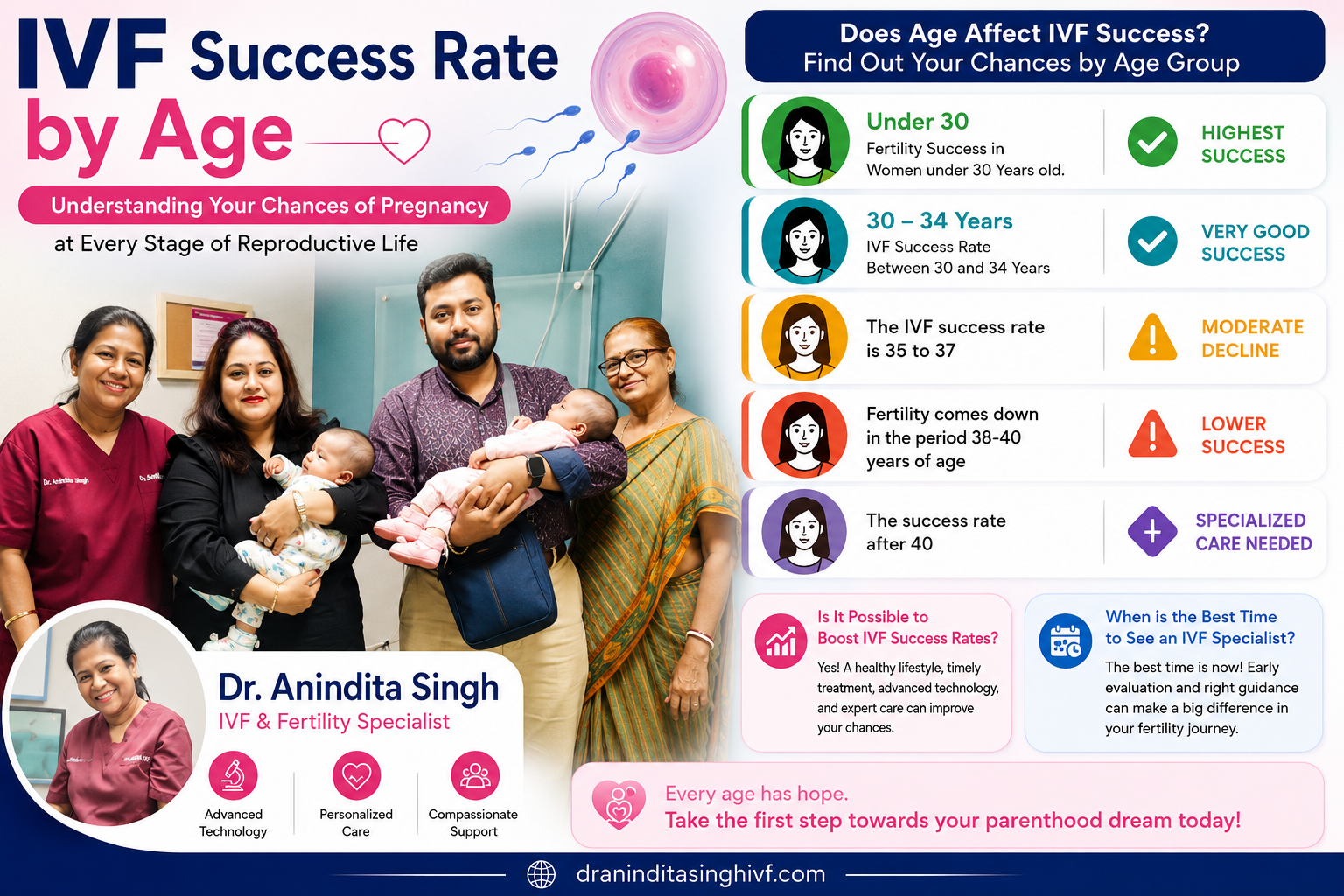
A couple’s first question as they begin their fertility journey is, “What are the chances of IVF working for us?” There are many factors to consider, but age is one of the most significant factors that can affect IVF success.
A combination of several factors can lead to different success rates at different periods in life, despite the fact that IVF (In Vitro Fertilisation) has assisted thousands of couples in becoming parents. Being aware of the effect of age on fertility and treatment results can assist you in making decisions and finding treatment when it is most appropriate.
Since she is an experienced IVF doctor, Dr Anindita Singh frequently leads her patients through this significant discussion and educates them regarding what they can realistically expect from the treatment.
What is the reason why age is a factor in the success of IVF?
Women have a set number of eggs when they are born. The number of eggs is reduced, and the quality is reduced as age goes up. The younger eggs tend to be more fertile and able to develop into healthy embryos.
As well, the older one gets, the greater the chance that they will suffer from:
- Lower ovarian reserve
- Reduced egg quality
- Higher chances of miscarriage
- Increased chromosomal abnormalities
That is why, in general, the success rates of IVF are lower in women over the age of 40.
Fertility Success in Women under 30 Years old.
The IVF success rate tends to be the best for women under 30. Egg quality tends to be high, and the body is more receptive to fertility drugs.
If a woman has certain conditions like blocked fallopian tubes, severe endometriosis, male factors of infertility, or unexplained infertility, she may not require IVF at this stage.
The success rate in this age group is regarded as the best for the following reasons:
- Eggs are healthier
- The quality of the embryos is generally higher.
- The chances of implanting are increased.
- The risks of pregnancy problems are reduced
Fertility statistics indicate that women under 30 may have some of the best IVF success rates.
However, Dr Anindita Singh regularly advises younger patients not to postpone fertility evaluation if they are having issues, as treatment will tend to be more effective if it is done early.
IVF Success Rate Between 30 and 34 Years
This age group is considered very suitable for IVF treatment. There is a gradual decline in fertility, but fertility remains high for most women.
Women of this age group tend to be good responders and yield high-quality embryos.
It is during these years that many couples start their fertility treatment, as they might have already undergone a period of natural attempts.
Success is still promising because:
- Egg quality remains fairly good.
- Hormonal response is still acceptable
- The proportion of implants successfully placed is high.
This is generally considered the best time to try to get fertility help when pregnancy isn’t occurring naturally.
The IVF success rate is 35 to 37
The age of 35 is a significant milestone in terms of fertility. At this age, the quality of eggs starts to decrease more rapidly.
This is not to say IVF won’t work. Treatment can help women in this age group conceive successfully. But doctors can suggest that the action should be taken as early as possible rather than after long periods.
Women who fall into this category might experience:
- Lower egg reserve
- Some loss of embryo quality.Minor loss of embryo quality.
- A higher incidence of time spent trying to get pregnant. Longer time to pregnancy.
Dr Anindita Singh frequently tells patients that if they come in after 35, it can mean the difference, since there may be fewer treatment possibilities later on.
Medical advice is generally recommended if you are over 35 years and have been attempting a pregnancy for over 6 months.
For women aged 38-40, the IVF success rate is 30-35%. For women between 38 and 40 years, the IVF success rate is 30-35%.
Fertility comes down in the period 38-40 years of age
The number of eggs decreases greatly, and the likelihood of chromosomal abnormalities increases. There is still a chance for IVF to work, with some support sometimes required.
Some women may require:
- Higher medication doses
- More monitoring
- Multiple IVF cycles
While success rates are not as high as those of younger age groups, pregnancy can still occur.
When patients hear about ageing, they become concerned. But, Dr Anindita Singh tells couples that age is a small part of the equation. Other medical history, lifestyle, and overall health are also important.
The success rate after 40
IVF in women over age 40 is possible, but more difficult.
The primary reason is the quality of the eggs. Healthy eggs diminish in numbers, and the body might not respond quite as well to stimulant medications. Doctors may mention donor eggs at this point, if necessary.
However, you should not give up. With proper guidance and personalised treatment, many women have become pregnant after 40 years.
Treatment plans may be made more personal, as each patient’s circumstances are unique.
Several other factors impact the success of IVF. Age does matter, but not more than other things.
Other factors that can affect IVF success rates include:
Overall health
- Hormonal balance
- Sperm quality
- Uterine health
- Lifestyle habits
- Smoking or alcohol abuse is no longer permitted.
- Stress levels
- Having a healthy lifestyle can enhance the body’s response to treatment.
During IVF, Dr Anindita Singh regularly urges her patients to prioritise their diet and nutrition, sleep routines, exercise, and stress management.
Is It Possible to Boost IVF Success Rates?
Although your age can’t be altered, some habits could help improve your fertility.
A healthy lifestyle that includes a balanced diet, getting a proper amount of rest, and avoiding cigarettes can help make it a better environment for pregnancy.
Managing stress is also important. Emotional support from family, friends or professionals can make IVF easier and can be emotionally demanding.
Most importantly, don’t wait to treat if you already have fertility problems.
When is the best time to go and see an IVF specialist?
If you feel like you should consider seeing a fertility doctor, you should:
- You are less than 35 years old and have been trying for more than a year.
- Your age is over 35, and you have been trying for 6 months.
- Experience irregular periods.
- It is confirmed that you suffer from PCOS, endometriosis, or blocked tubes.
Early evaluations may yield more treatment options and better planning.
Schedule Your Appointment Today:
- Phone: 9830203055
- Online Booking: click here
Conclusion
The success rate of IVF varies by age, but it does not give the complete picture. Treatment is more likely to succeed in women under 35 years of age, and may be more difficult in women over 35 years and particularly over 40 years of age. It’s not about panic, but when to act. The chances are much improved with early consultation, the correct evaluation, and an individual treatment plan.