
IVF Cost in Kolkata 2026 Full Guide – Dr Anindita Singh
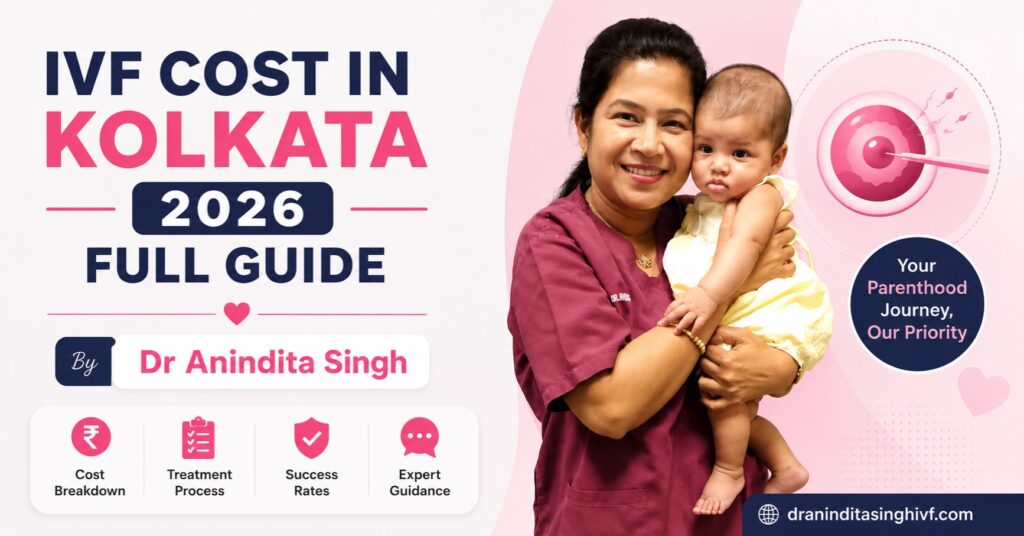
One of the initial questions that occurs to your mind while thinking about IVF is the cost. IVF may be a daunting experience- both emotionally and economically. The positive aspect is that in Kolkata, IVF is not as expensive as in most other cities. We will discuss the cost of IVF in this blog in a simple, easy manner to enable you to plan well and feel confident about what you are doing next. What does IVF cost in Kolkata? In 2026, the cost of one IVF cycle in Kolkata usually ranges between ₹80,000 and ₹2,50,000. This is an approximate range. The ultimate price may be cheaper or more expensive based on your status, the hospital you select and your form of treatment. It is also possible that some couples will require more than one cycle thus adding to the overall cost. What is the Process of IVF? In order to get a better idea of the cost we shall divide it into simple parts. The first one is the consultation and testing stage: This involves a doctor visit, blood tests and scans to ensure that your fertility is healthy. This is followed by the medication stage: To make your body produce several eggs, you will have to inject hormones. A decent portion of the cost can be absorbed by these medicines. The doctor then carries out the egg retrieval: Here the eggs are removed out of the ovaries. This is a process that is not long. Then at the lab the eggs and the sperm are fused to form embryos: When the embryos are ready, the one that is best is inserted into the uterus. A combination of all these steps is known as one IVF cycle. Why Does IVF Cost Vary? The question that many people ask themselves is why IVF is not of a fixed price. This is due to the fact that IVF is not a single procedure. It involves a number of stages and the treatment plan of each individual is different. The cost might vary because of some of the following reasons: Your age Your medical condition The quality of the eggs and sperm. The kind of IVF procedure performed. The required number of cycles. Thus, two individuals can visit the same clinic and pay more or less. Additional Expenses That You Need To Be Aware Of The fundamental IVF price is sometimes not all. This may have some extra costs based on your circumstances. As an example, when you require ICSI (a special procedure in which a single sperm is injected into the egg), it will be an extra charge. In case you wish to freeze embryos to use in the future, then there will be a storage fee every year. Couples might also require the use of donor egg or sperm, thus raising the cost. Other highly developed tests include genetic screening, that are not compulsory but can be prescribed in some instances. What is the Number of Cycles that You May Require? A factor to consider is that IVF is not a one-time process that can always be successful. It might take more than a single cycle by some couples. This implies that it can be subject to an increase in the total cost. This is the reason why you should plan your budget flexibly. There are, however, numerous individuals who do succeed in the first or second cycle so long as they begin at the appropriate time. Is IVF Cheap in Kolkata? IVF in Kolkata is cheaper as compared to other cities such as Mumbai or Delhi. There are numerous clinics and they are of good quality at fair prices. Remember, clinics also offer: Multicycle package offers. Financial support programs or discounts. In some situations, government hospitals can provide low-cost or free IVF, but have longer wait periods. Is it Better to select the Lowest Price? It is also very easy to select the cheapest clinic, but not necessarily the best. IVF is a delicate procedure, and quality is important. A clinic with qualified doctors and well-equipped is likely to be pricier; however, it might also increase your success rate. Rather than simply paying attention to price, attempt to look at: Doctor’s experience Clinic reputation Success rates Patient reviews Selecting the appropriate site will save you both time, finances and emotional strain in the long-term. Planning your IVF Budget By forethinking, you can make your IVF experience easier. Discuss with your physician prior to treatment and request an estimate of the cost. Be sure that you know: Content of the package What will be additional? The cost of the medicines Possible additional procedures It can always be a good idea to save a little more in case you require another cycle. Basic Advice to save IVF expenses It is not difficult to control the cost of IVF in a couple of clever moves. Attempt to make a comparison between a couple of clinics. Questions and no questions about clarifying doubts. Keep to the instructions of your doctor. Absence of medicines or appointments can also impact the cycle and this can result in repeat costs. Be healthy. Eating well, avoiding stress, and living a healthy lifestyle can enhance your success. Emotional and Financial Balance IVF is not all about money. It is also an intense personal process. It is understandable that one is concerned about the price, as well as the performance. Be frank with your partner and discuss money and expectations. When you plan it out, the stress can be minimized, and you will feel in control. Never forget that you are not the only one; many couples undergo this journey and become successful. Schedule Your Appointment Today: Phone: 9830203055 Online Booking: click here Conclusion The cost of IVF in Kolkata in the year 2026 is very adaptable; however, the average amount that a couple spends on a single cycle is 80,000-25,000. The overall price will be based on your personal needs, treatment plan, and the number of cycles you need.
Best Age for IVF Treatment: When Should You Start? – Dr Anindita Singh
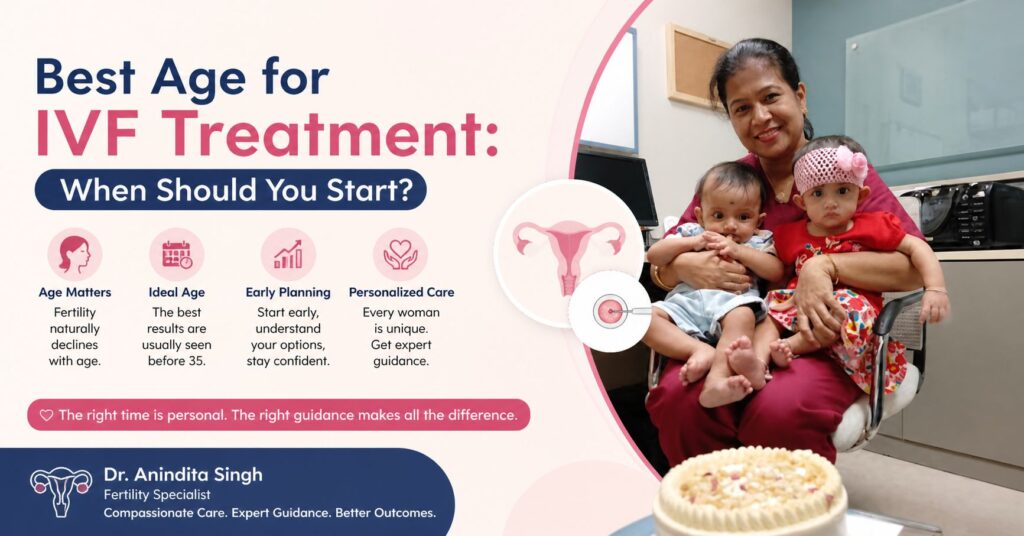
Having a family is a serious matter, and it might not just occur to some couples. IVF (In Vitro Fertilization) can help in this. IVF is a procedure in which the combination of an egg and sperm takes place outside the body and an embryo is inserted into the uterus to get pregnant. The question that has been raised most often is: What is the optimum age to undergo IVF? The same cannot be said to all, though age is a very significant factor. The age factor can influence your future fertility, and knowing this is important to make a lot of decisions. The importance of Age in IVF. Women are born with a certain quantity of eggs. With age, the quantity and quality of these eggs reduces. This implies that it may end up being more difficult to conceive with time. The younger eggs are healthier and they have a higher chance of growing into a healthy embryo. With age eggs can develop more issues, and this can result into less possibility of pregnancy or higher possibility of miscarriage. IVF has the potential to address most fertility issues, but it is not able to completely address the impact of age. And that is why time is important. IVF in Your 20s Your fertility is the best in your 20s. You are a healthy egg producer, and you have a high probability of becoming pregnant, natural or using IVF. The majority of women in their 20s do not require IVF unless the fallopian tubes are blocked, endometriosis is severe or there is a male fertility problem. In case IVF is required at this age, then the success rates are normally high. Unless there is a compelling reason, doctors tend not to recommend rushing into IVF at such a time. The first one is natural conception. IVF at a young age (30s). The end of your 30s are not too late to have a baby. The quality of the eggs remains rather high, but it can begin to decrease gradually. Most of the women within this age bracket are still capable of conceiving naturally although there might be problems, IVF may be an option. The success rates remain to be good and the body tends to respond well to therapy. When you have spent 1 year with no success in having a baby it might be time to approach a fertility specialist. Complications can be avoided by taking action early. IVF After 35 An age 35 is often regarded as a significant age in fertility. The quality and quantity of eggs begin to decrease more rapidly after this. This does not imply that it cannot get pregnant- it only implies that it would require more time and possibly medical assistance. IVF is usually advised in the case of women at this age provided they are experiencing problems. Doctors typically propose that one should not wait too long beyond 35. In case you have been trying 6 months without success, then you should seek help early. Although the success rates are less when compared to younger women, a significant number of women between 30 and 40 years old undergo successful IVF pregnancies. IVF After 40 Fertility becomes difficult after 40. There is a significantly less amount of healthy eggs and the probability of a natural pregnancy decreases. IVF can still be done, but with less success. In other instances, physicians can recommend the use of donor eggs in order to maximize the probability of success. One should bear in mind that each individual is unique. Other women might conceive after 40, although it might need additional support and preparation. It is Not Age-Related. The factor of age is also important, but not the only one, that influences IVF success. Others are also important like your general health, hormone levels and lifestyle. For instance, the healthy body is able to react to the treatment. Your chances can be enhanced by eating healthy, exercising, avoiding bad habits such as smoking and use of alcohol. It also depends on the health of your partner. The quality of eggs is as crucial as sperm quality in the IVF process. When Do You Think You Should Think about IVF? You might want to consider IVF when: You have been trying to become pregnant You are above the age of 35 and have been trying for more than six months You have conditions such as PCOS, endometriosis or blocked tubes. Your partner has sperm issues Other therapies have failed. The sooner you get assistance, the greater you have a chance of success. Is It possible to enhance IVF Success? Although you may not be able to do anything about your age, it is not too late to increase your chances of success by taking care of your body. A healthy diet, sleeping enough, and stress also help your body to react more in response to IVF. It is also important to be active and to have a healthy weight. Please try to be positive and patient. IVF may be time-consuming, and each process is unique. Feelings During IVF IVF is not only physical, but may also be emotional. It can be stressful when waiting for results, being uncertain, and dealing with expectations. You should discuss with your partner and tell him or her how you feel. Family support or a counselor can help, too. It is important to take care of your mental health in the same way that you take care of your body. Conclusion The age at which IVF should be initiated is not perfect. However, the earlier it is initiated, the higher the chances of its success are. The success rates of women are highest in their mid 20s and early 30s, and gradually decline past 35 and beyond. The last but the most significant is that you should not wait long in case you have problems. Timely assistance can go a long way. IVF can bring hope to lots of couples with the
Lifestyle Tips to Boost IVF Success Naturally (Diet, Sleep & Stress)

The process of IVF may be overwhelming, both physically and emotionally. Although the primary aspect of the process is medical treatment, your daily routines are also significant. How you eat, sleep and manage stress can work to your advantage and better your chances of success. We will consider some of the simple and practical lifestyle modifications which can be made to a difference in your IVF journey. Eat Right to Boost IVF Success Naturally Food is stronger than we usually think, particularly as regards fertility. Eating home-cooked and fresh meals with lots of fruits and vegetables can make your body work better. Eat whole grains, nuts, seeds, eggs, fish and lentils daily. These foods are a source of valuable nutrients that help maintain hormone balance and enhance the quality of eggs. Meanwhile, it is also a good idea to reduce the consumption of junk food, sweets, and highly processed meals. These have the ability to influence your general health and can disrupt the balance of your body. Also, don’t forget to drink enough water. Remaining in a hydrated state allows the smooth running of your body as well as the well-being of your system. Sleep More Sleep may not be a big deal, but it can be a big deal in your health. By sleeping properly, your body has a chance to restore itself and have the appropriate hormone levels. Attempt to have a range of between 7 and 8 hours of sleep per night. You can go to bed every day at the same time, which can allow your body to get into a routine. It can also be used to prevent screens such as phones or laptops before going to bed because they may complicate the process of sleeping. Even a cozy, peaceful sleep can significantly enhance sleep quality. Control Your Stress IVF may introduce a plethora of emotions: hope, anxiety, excitement, and fear. Although such feelings are entirely natural, excessive stress may have adverse consequences on your body. It is significant to find relaxation techniques. Nothing complex is needed: it can be a deep breath, some light yoga, or even a brisk walk to relax your mind. You can also get yourself in a good mood by spending time on an activity that you like, such as reading a book or listening to music. Being open with your partner or with a person that you trust can help you to feel less lonely. Sometimes, even telling your mind will relieve you a lot. Keep Your Body Active Exercise is good but when undergoing IVF, one should not overdo them. Light exercises such as walking or stretching will be sufficient to keep your body in motion and enhance blood flow. Do not do vigorous exercises or anything that overstrains your body, particularly after some levels of the treatment. Eat in a Healthy Manner The weight of your body may influence the functioning of your hormones. It is sometimes difficult to be either too underweight or overweight so as to achieve success in IVF. Concentrate on well-balanced nutrition and light physical exercises instead of dieting. This is to maintain your body in a healthy and stable situation. Avoid Bad Habits It is advisable to quit drinking alcohol or smoking so as to avoid it during this period. These behaviors may influence the quality of eggs and decrease your success. It is also prudent to avoid taking much caffeine and to avoid overdepending on tea or coffee. Even minor adjustments can make a tremendous positive difference. Take the Advice of Your Physician Although lifestyle changes are beneficial, they must be combined with your medical treatment. Remember to take your medications and see your appointments. The advice of your doctor is your situation-specific and it is therefore of high value to adhere to it. Be Kind to Yourself IVF is not a mere physical procedure–it is an emotional experience as well. You might have days when you are optimistic and days when you are depressed. That’s completely okay. Try not to be too hard on yourself. Concentrate on day-to-day events. Praise yourself on little successes and remind yourself that you are doing the best you can. Schedule Your Appointment Today: Phone: 9830203055 Online Booking: click here Conclusion Naturally, supporting IVF is all about taking care of yourself in some simple, regular ways. Healthy eating, sleep, and reduced stress levels can aid your body to react to treatment. These changes can be tiny, yet they will make a big foundation on your fertility journey. Each trip is unique, and outcomes may be different. However, you can provide yourself with the best possible opportunity by developing healthy habits and being positive. Believe in the process, take good care of your body, and proceed with hope. Keeping yourself well in some simple, ordinary ways is of course all about supporting IVF. Eating well, sleeping well and less stress can make your body more responsive to treatment. These are minor changes but when combined, your fertility journey will be well established. Each of the journeys is individual, and the results may not be the same in every human being. Nevertheless, you give yourself a chance of the best by developing good habits and having a positive attitude. Believe in the process, take care of your body and go forward with hope. Also, one should keep in mind that consistency is more important than perfection. There is no need to plan on a routine day in, day out, but you can take consistent, thoughtful decisions that will eventually enhance your general health. Simple things, such as eating healthy food, sleeping well, or spending some time to rest, can make a significant difference in the long term. The emotional support is also essential at this stage. Be with people who support and love you, be it your partner, family or close friends. Should you require it, then do not hesitate to seek professional help or counseling to assist you in controlling your emotions. Above all, be kind to yourself.
Common Causes of Female Infertility and How to Treat Them – Dr. Anindita Singh
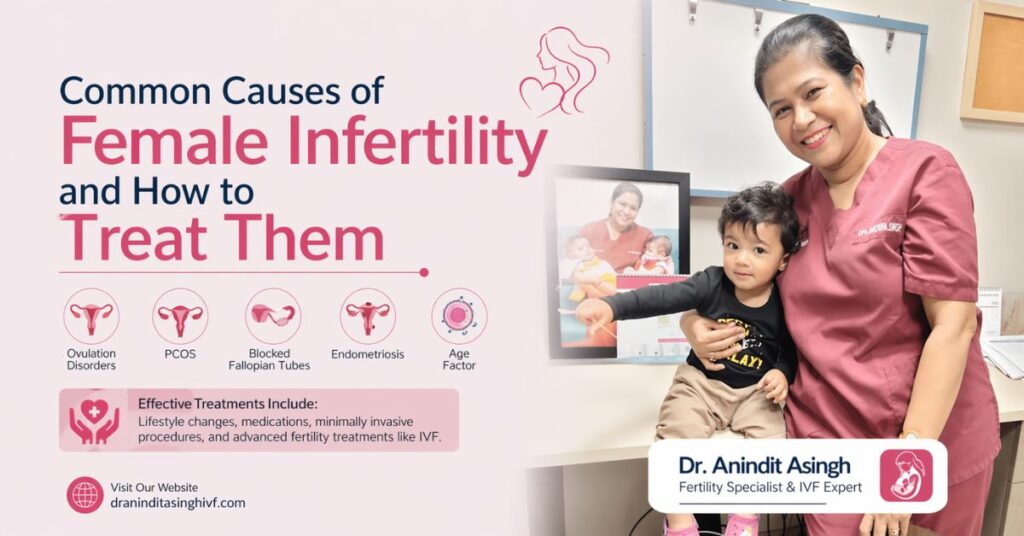
Infertility is a widespread problem among Indian women these days. It may be stressful and confusing, and the positive news is that most of the causes of infertility are treatable. The first step that leads to the correct solution is to understand why it is so. What Is Female Infertility? Female infertility refers to the inability to conceive after some time. This is usually common in: 12 months among women under 35. Women who have been above 35 for more than six months Note: This may be due to various causes such as issues with ovulation, the uterus or general wellbeing. 1. Problems with Ovulation The ovary releases an egg every month, and this is called ovulation. Without regular ovulation, it is hard to become pregnant. PCOS (Polycystic Ovary Syndrome) is one of the common conditions. Signs: Irregular periods Missed periods Weight gain or acne These signs will be accompanied by more serious issues such as depression and anxiety. This, in turn, might lead to serious body image issues. It is important to remember that body image issues are often linked with an increase in body weight, thinning of hair, and dermatological changes such as the development of dark patches across the skin. Treatment: Although the common opinion is that PCOS is an irreversible condition, it can be managed properly. Considering this, some of the ways by which this condition can be managed are: Eating well and exercising. Drugs to help with ovulation. Hormone treatment Out of these, eating well and maintaining a strict, balanced diet for at least six months is the best way. Considering this, including foods rich in fibre, lean protein, and fats can assist in stabilising hormone levels, weight loss, and increasing the chances of pregnancy. In a country like India, where reportedly 25% of women within the reproductive age suffer from this condition, promoting healthy food habits is a must. 2. Blocked Fallopian Tubes Fallopian tubes help in the meeting of the egg and the sperm. When they are clogged, then fertilisation becomes impossible. Causes: Some common causes related to blocked fallopian tubes are: Infections Past surgeries Endometriosis There are some high-risk factors involved as well. Some of them are STIs in the Pelvic Area, Hydrosalpinx, and Ectopic pregnancies (if they took place in the past). The doctors commonly use Hysterosalpingogram (HSG). HSG is a special type of X-Ray that is used to detect clogged tubes. Treatment: Common treatment procedures associated with clogged fallopian tubes are: Operation to enlarge the tubes. Bypassing the tubes in IVF treatment Here, it is important to remember that the mode of treatment will be selected according to the age of the woman. Considering this, enlarging or repairing the tubes usually involves procedures like Recanalization, Laparoscopic Surgery, and Tubal Ligation Reversal. However, these are only considered for younger women. In contrast, bypassing the tubes in IVF treatment is only considered when the tubes themselves are damaged beyond repair. 3. Age Factor The quality and quantity of eggs decrease as women get older. This complicates getting pregnant. Treatment: Although for this condition, pregnancy is always a 50/50 chance, there are some ways to ensure the success of pregnancy: When possible, plan pregnancy earlier. Freezing of eggs to use in the future. IVF/donor egg alternatives Out of these ways, the best option is to plan a pregnancy early. The prime time to think about pregnancy is during the late twenties to early thirties. If that threshold is crossed, it is wise to consider IVF. For that, you can consult Dr Anindita Singh, the best IVF doctor in Kolkata. 4. Hormonal Imbalance The menstrual cycle is regulated by hormones. Unless they are balanced, ovulation might not occur normally. Signs: Some of the most common signs of hormonal imbalance are: Irregular periods Weight changes Tiredness Weight changes contribute most to hormonal changes. So it’s always wise to maintain a healthy weight through daily exercise. The easiest way to maintain such a weight is by avoiding junk and high-fat foods for at least six months. Remember, your lifestyle affects your ability to get pregnant greatly. When Do You Need To See A Doctor? There are certain signs which will tell you when you need to consider seeing a doctor. These signs are: You have long been attempting to no avail. You have irregular periods. You have miscarried several times. Treatment at an early age can enhance your conception. General treatment suggestions can include: Medicines to help with ovulation Surgery for physical problems Therapies such as IVF or IUI. The treatment plan varies, and each is based on your condition. Schedule Your Appointment Today: Phone: 9830203055 Online Booking: click here Conclusion There are numerous causes of female infertility, the majority of which can be eliminated or controlled. The trick is to realise the issue at hand early enough and do the appropriate things. Through adequate care, medical care and healthy lifestyle changes, more women can have a successful pregnancy. In case of any challenge, do not put it off to get assistance- early is the best solution.
What Is IVF Treatment? Explained in Steps: Process Explained to Beginners
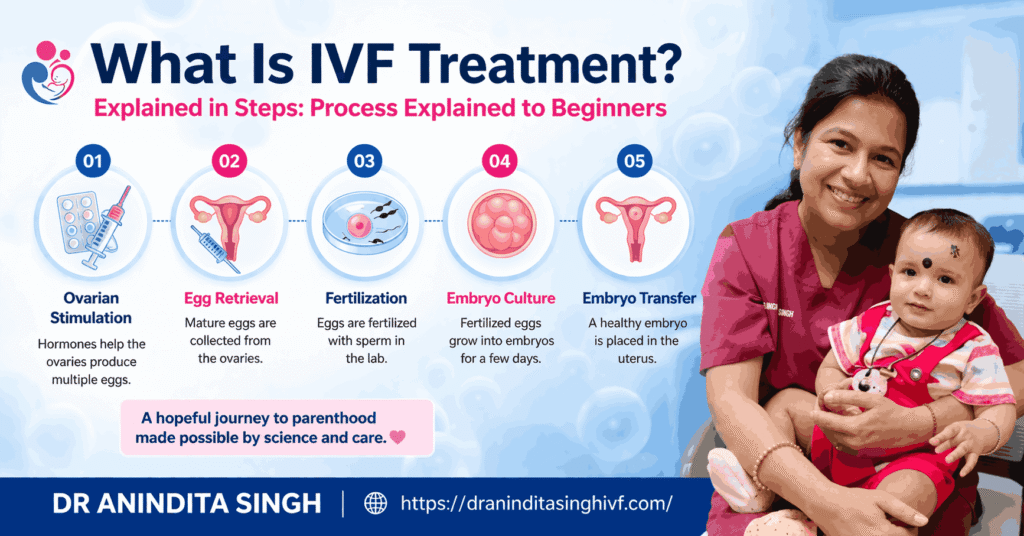
One of the most common and successful assisted reproductive methods that has enabled couples to conceive when they find it hard to conceive naturally is the In Vitro Fertilisation (IVF). IVF can be quite complicated for a beginner, but the process can be broken down into easy steps. What Is IVF? IVF or In Vitro Fertilisation is a procedure which entails fertilisation of an egg and sperm within a laboratory. Fertilisation is initiated when the embryo is implanted in the uterus. This leads to pregnancy. IVF is generally recommended in the event of a case of obstructed fallopian tubes or low sperm count, ovulation disorders or an infertile person with no obvious cause. A Step Towards Successful Pregnancy Phase 1: Introductory visit and evaluation The IVF process is initiated with an elaborate consultation. Medical history is reviewed by the doctor, after which the following tests are recommended: Blood tests to monitor levels of hormones. Ultrasound to check the health of the ovaries. Male fertility examination (sperm). This will help determine the most appropriate treatment plan for an individual. Consult with Dr Anindita Singh, the best IVF doctor in Kolkata, for the best course of action. Step 2: Ovarian Stimulation The ovulatory cycle is the normal menstrual cycle in a woman. In IVF, fertility drugs are applied to get the ovaries to manufacture numerous eggs. This enhances the fertilisation possibilities. Frequent check-ups (blood tests and ultrasound) make sure that the ovaries respond well to the medications. This phase is on average 8-14 days. Step 3: Egg Retrieval After the eggs have matured, a small surgical operation is done to harvest them. This is known as ovum pick-up or egg retrieval. Under Dr Anindita Singh, the best IVF doctor in Kolkata: Mild sedation is used for doing it. Removal of eggs is done by a thin needle in the ovaries. This procedure normally takes about 20-30 minutes. The majority of women can go home the same day. Step 4: Sperm Collection A sample of sperm is taken on the same day as the retrieval of eggs of the female partner. The fertilisation is performed with the help of the healthiest and most active sperm. Sometimes, the use of previously frozen sperm or donor sperm can be utilised. Step 5: Fertilisation The eggs and sperm gathered are mixed in the laboratory. It can be done in two typical ways: Traditional IVF: The eggs and sperm are put together to allow nature to take care of fertilising them. ICSI (Intracytoplasmic Sperm Injection): A single healthy sperm is injected into an egg. Observation of the fertilisation process continues within the following days, with the embryos starting to develop. Step 6: Embryo Culture Once fertilised, it takes the embryos 3-5 days to be seen in the lab. During this time: Sound embryos are sensed. The quality and growth of them are evaluated. The best-quality embryo is transferred in order to maximise the success. Step 7: Embryo Transfer It is a painless and simple process whereby the embryo selected is inserted in the uterus using a thin catheter. This is normally not anaesthetised. The process requires a few minutes. The patient might be encouraged to have a brief rest following the transfer, but normal activities can most probably be resumed soon. Step 8: Waiting Period. Embryos which are transferred are then allowed to wait about 10-14 days, after which a pregnancy test is conducted. This stage might be a very stressful one, as patients are waiting to know whether the treatment has been successful. Step 9: Pregnancy and Follow-Up To determine a pregnancy, a blood test is carried out. With success, additional monitoring can be done to ascertain that the pregnancy continues normally. Otherwise, the doctor can tell about the following steps or further treatment. Please remember that a 100% success rate cannot be expected at this stage. However, Dr Anindita Singh, the best IVF doctor in Kolkata, has a high success rate and will do what is best for you. The Success of IVF The IVF success relies on a number of factors, such as: Age of the woman Quality of eggs and sperm. Underlying medical conditions Lifestyle factors Success rates among the younger women tend to be higher. Nevertheless, the use of IVF has helped many couples to conceive irrespective of their age. Is IVF Safe? IVF is considered to be a safe and familiar procedure. Even though drugs have some mild side effects (bloating or mood swings), there are hardly any severe complications when taken under the supervision of a professional. Schedule Your Appointment Today: Phone: 9830203055 Online Booking: click here Conclusion IVF is a progressive procedure that aims to assist couples in overcoming fertility issues and achieve their dream of having a child. Although it might appear complicated initially, it can be a lot easier and less stressful when one is aware of every stage of the way. In the right hands, featuring the latest technology and emotional attention, IVF offers hope to hundreds of people and couples. Considering this treatment, it is better to have a qualified fertility specialist to take the first step with confidence towards creating your family. Consult Dr Anindita Singh, the best IVF doctor in Kolkata, for the best results.